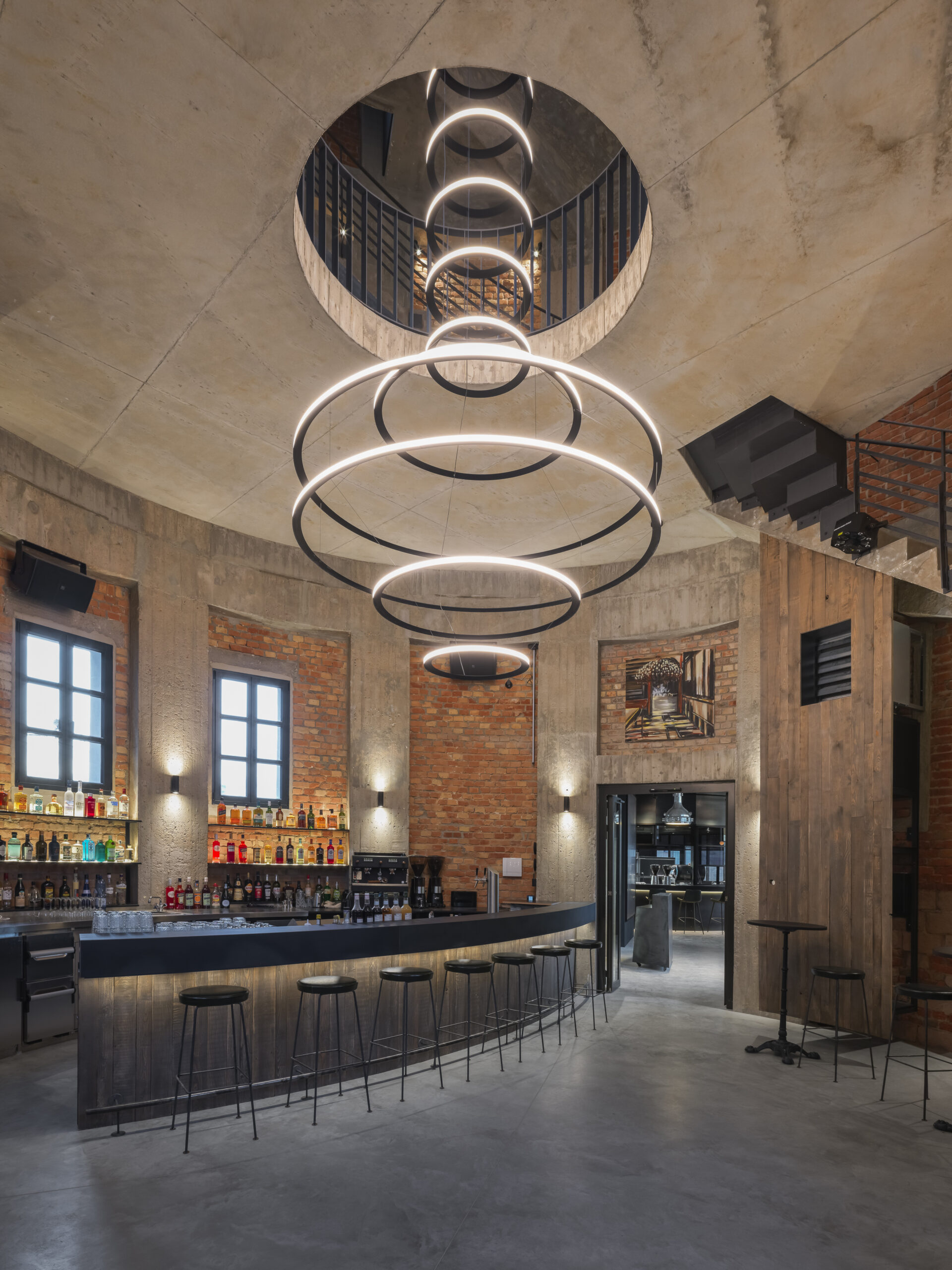


Water Tower, Heidelberg
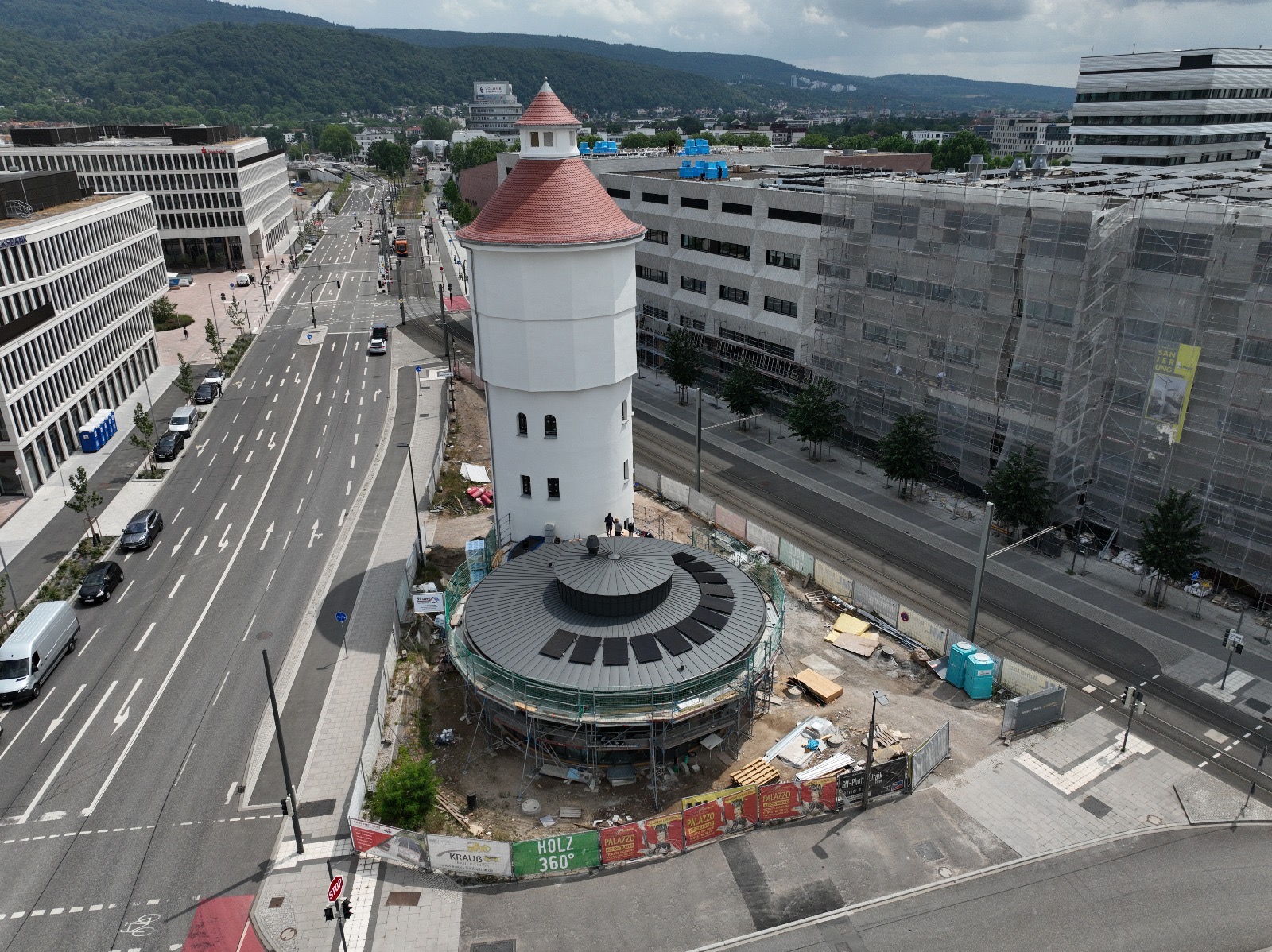
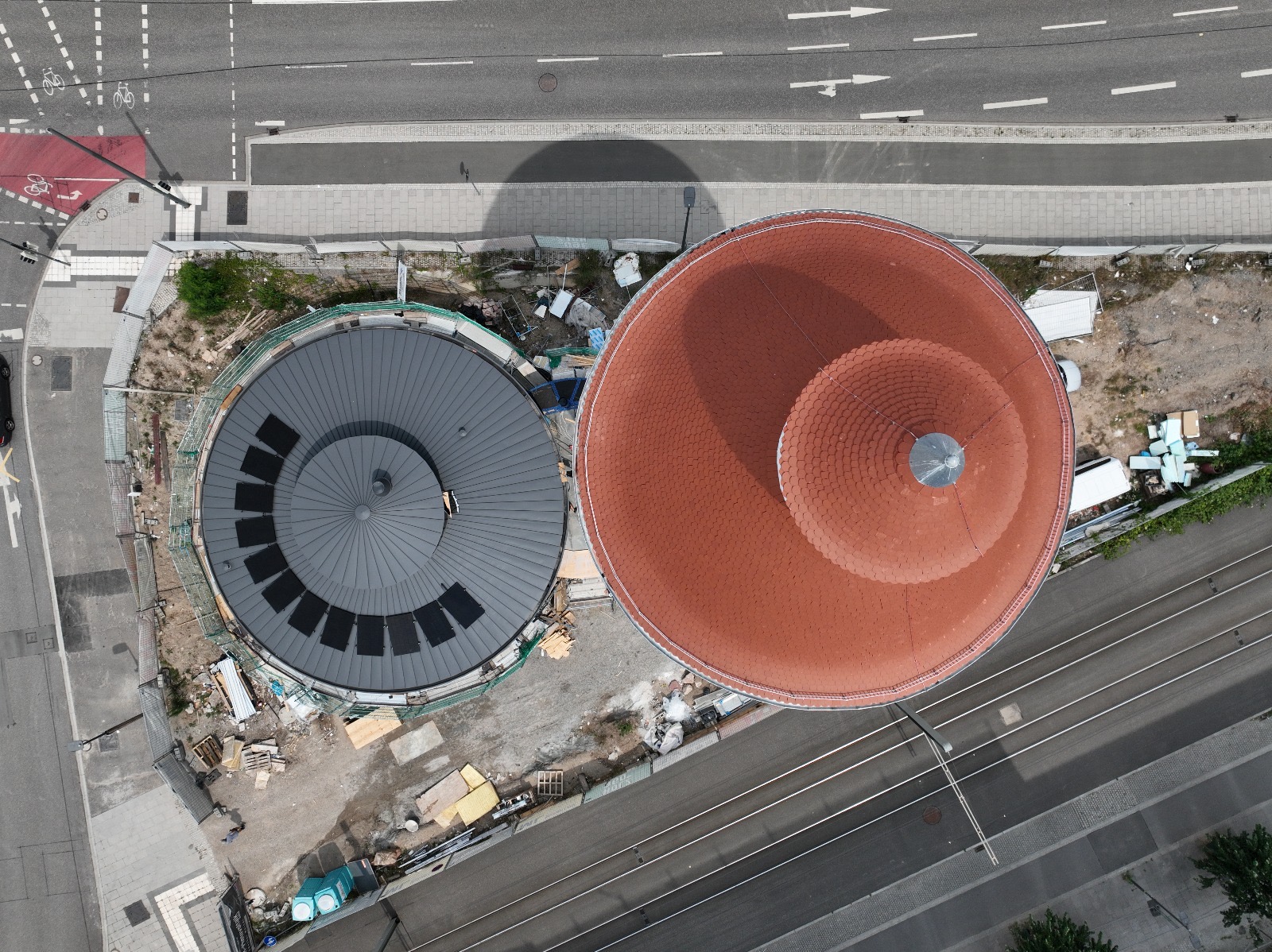
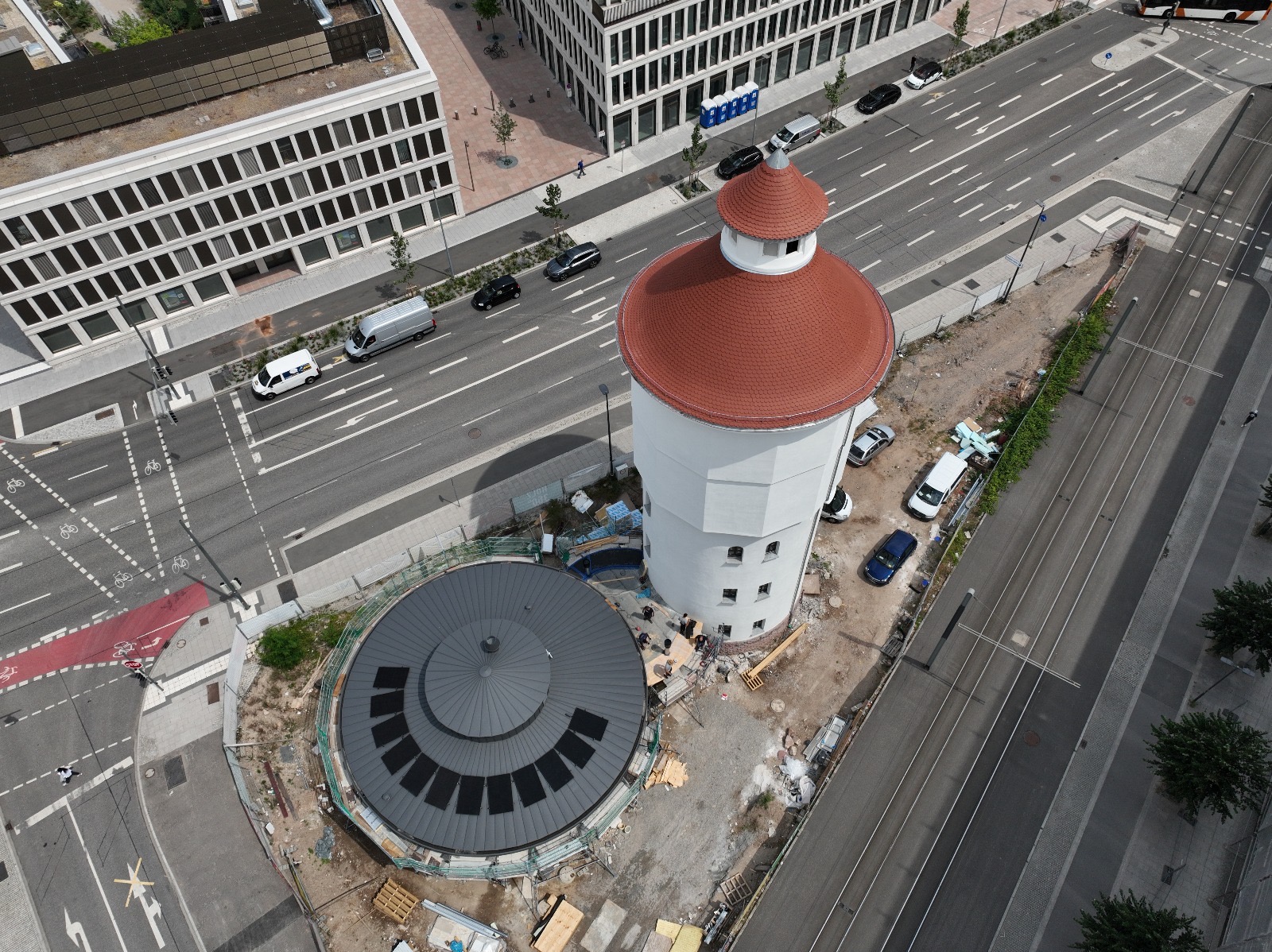
The project comprised the restoration and adaptive reuse of a listed landmark in Heidelberg, Germany, alongside the construction of a circular pavilion-like annex. The former Water Tower, which had fallen into disrepair after decades of vacancy, was revitalized through the introduction of a contemporary gastronomic concept accommodating a cocktail bar and restaurant.
Originally constructed in 1907 by Wayss & Freytag, the tower was realized using reinforced-concrete skeletal construction based on the Hennebique system and served as part of the water supply infrastructure for the Grand Ducal Baden State Railways.
Located within a key area of urban development and in immediate proximity to the newly established Europaplatz—serving as a connective node between the central railway station and the emerging district—the site was designated for gastronomic use.
The pavilion’s fully glazed façade establishes a light-filled and transparent spatial experience, fostering a visual dialogue with the historic structure and offering uninterrupted views of the landmark from all directions. A refined post-and-beam façade system, combined with an internal concrete load-bearing structure, enables an open and flexible dining layout, maximizing daylight penetration and panoramic outlooks.


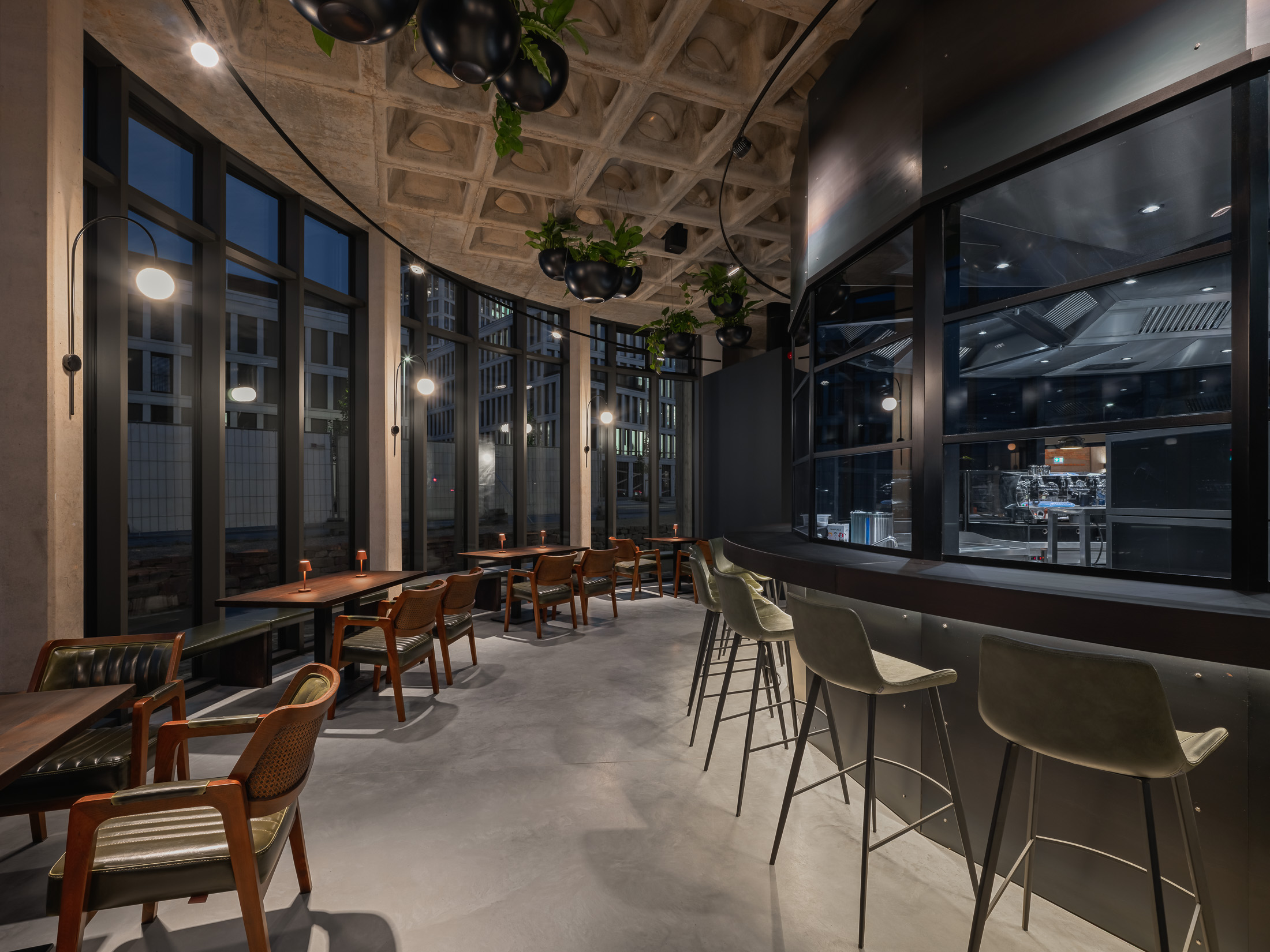
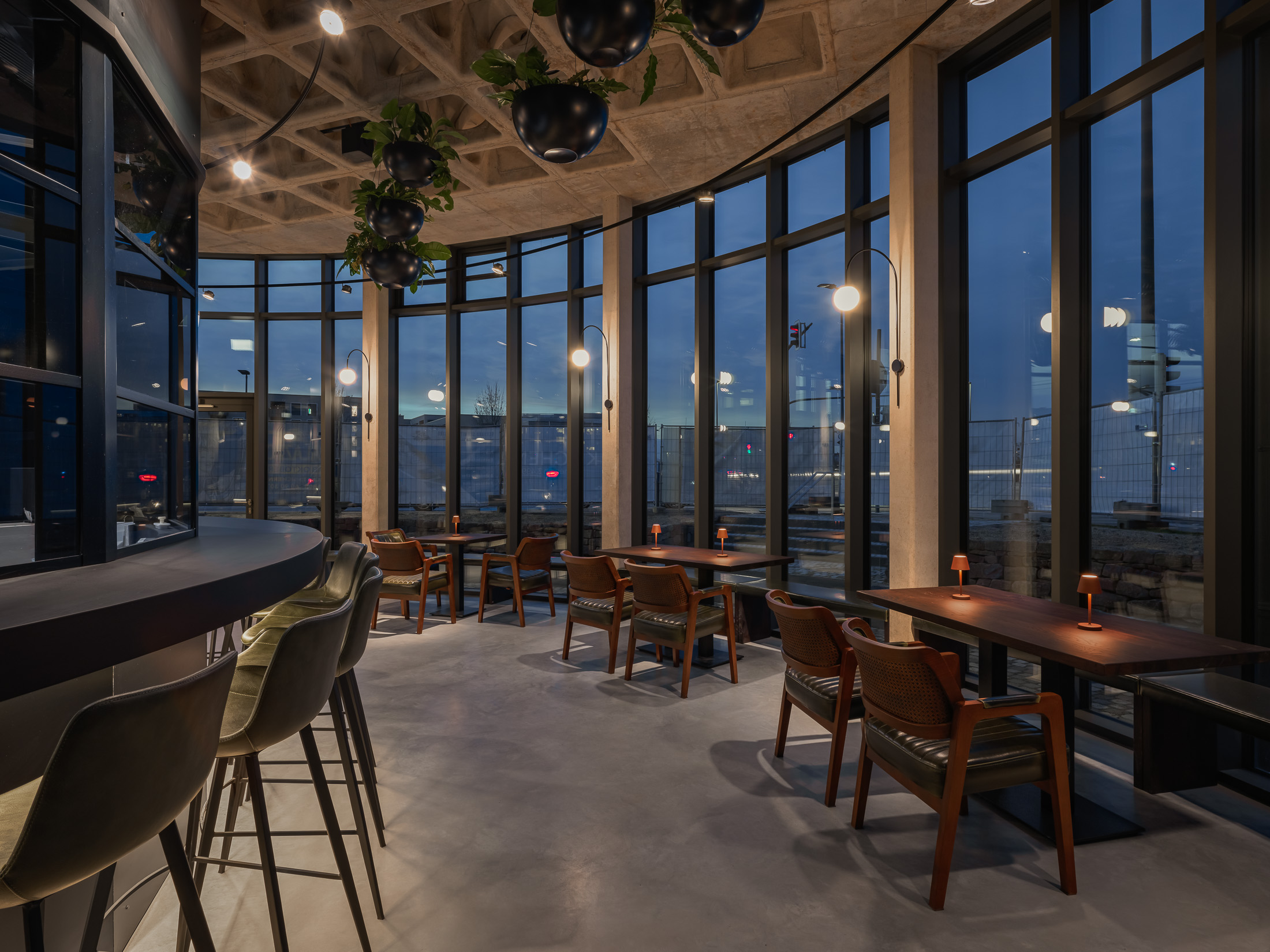

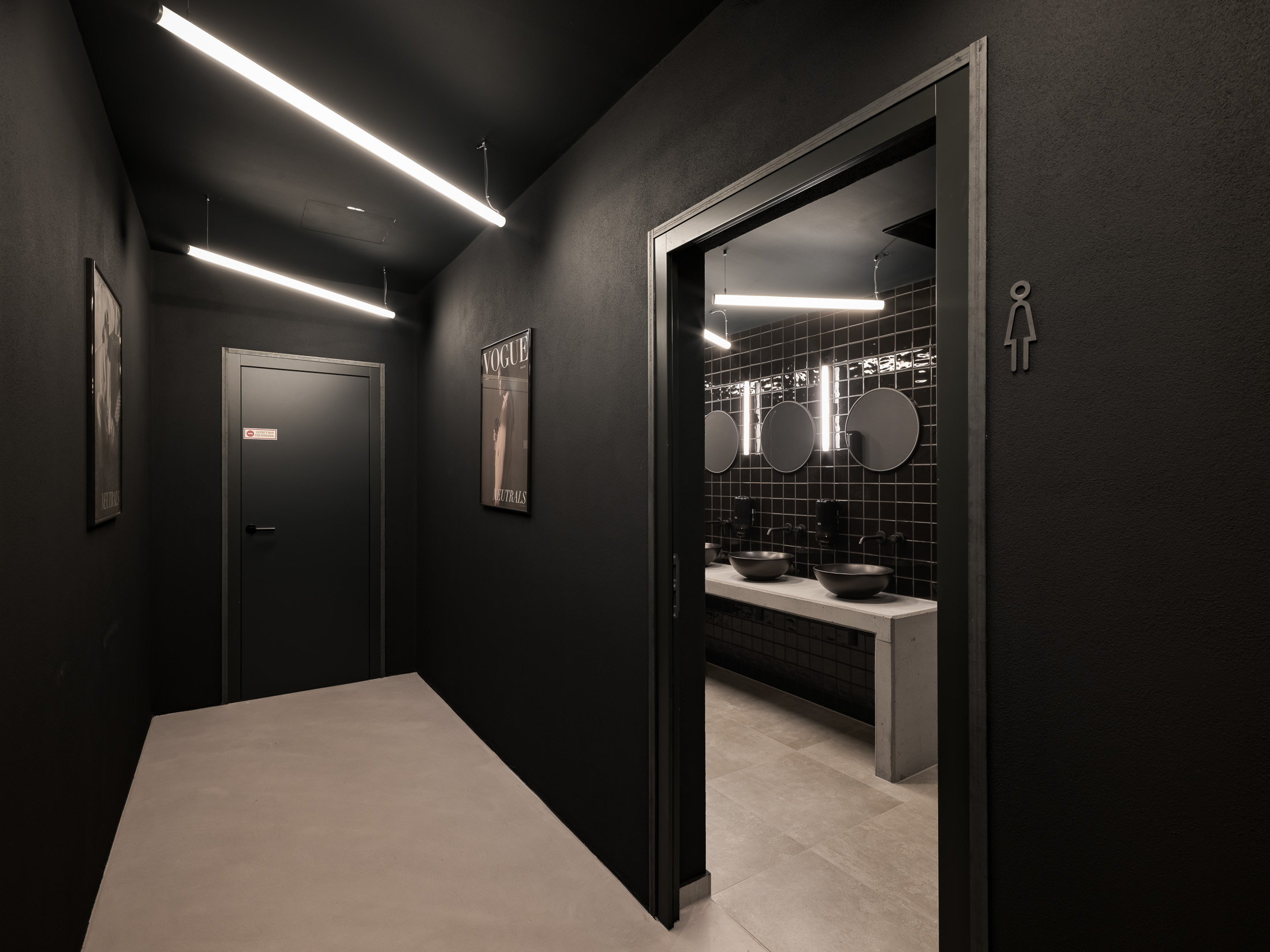
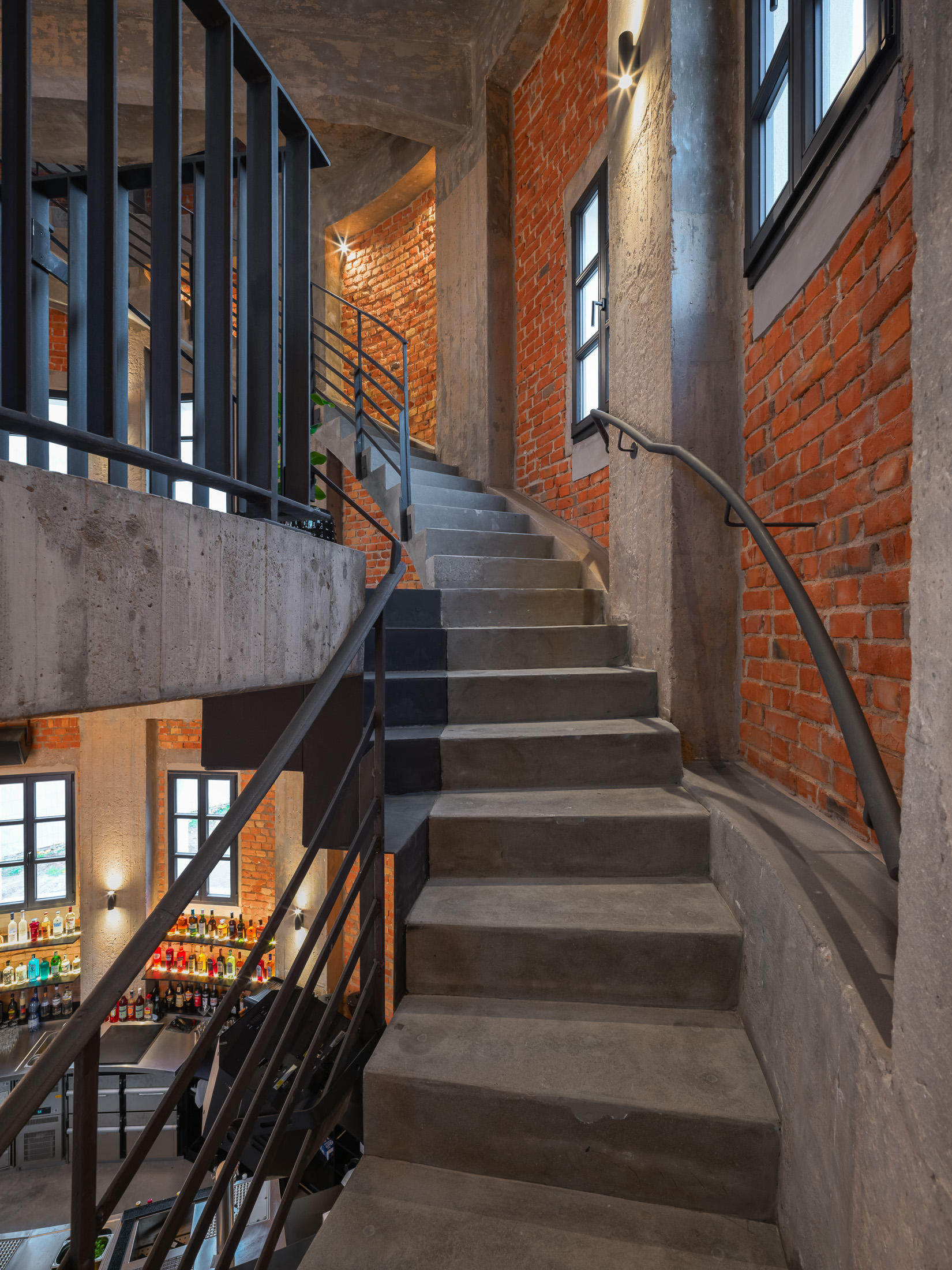
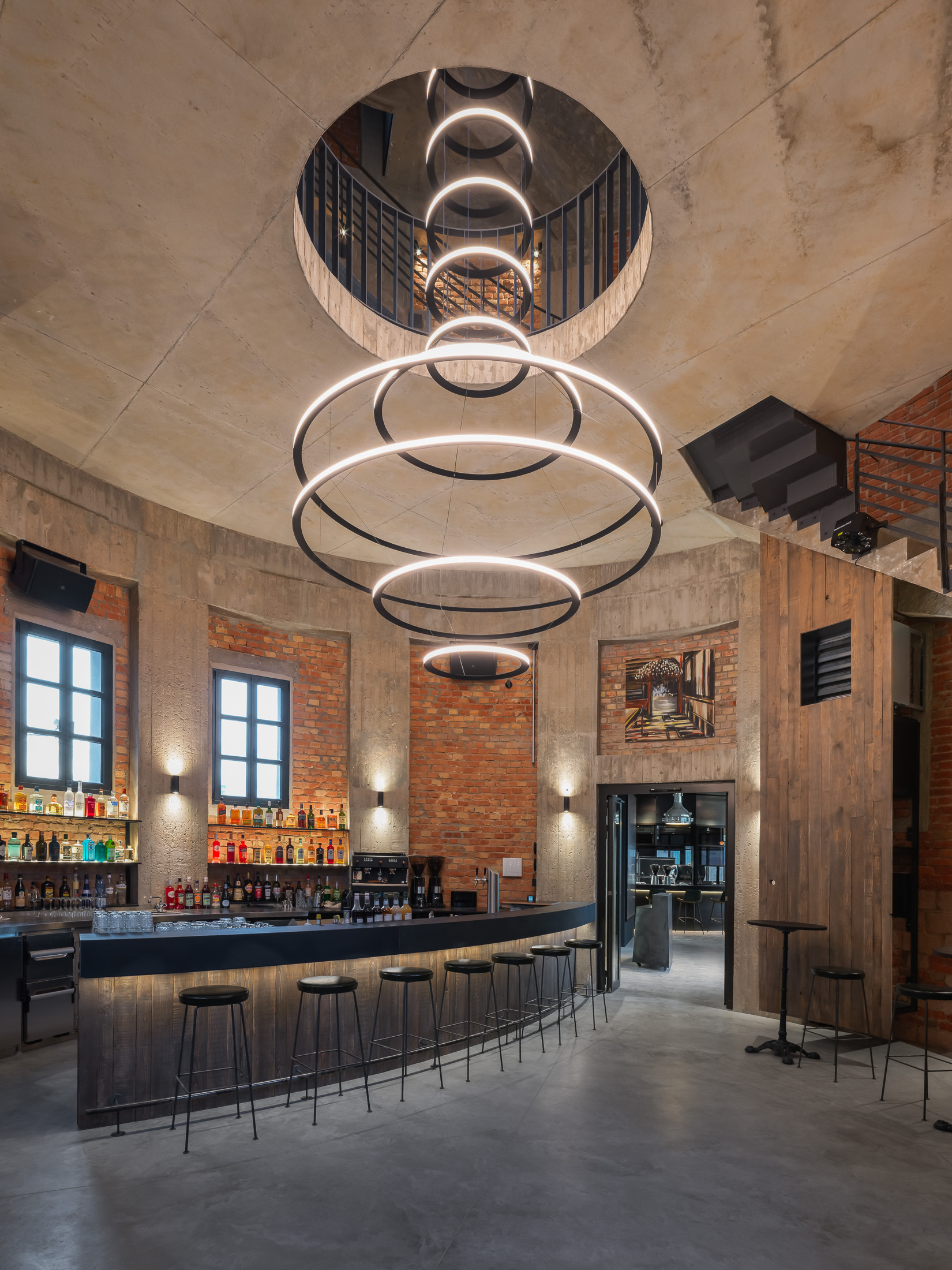
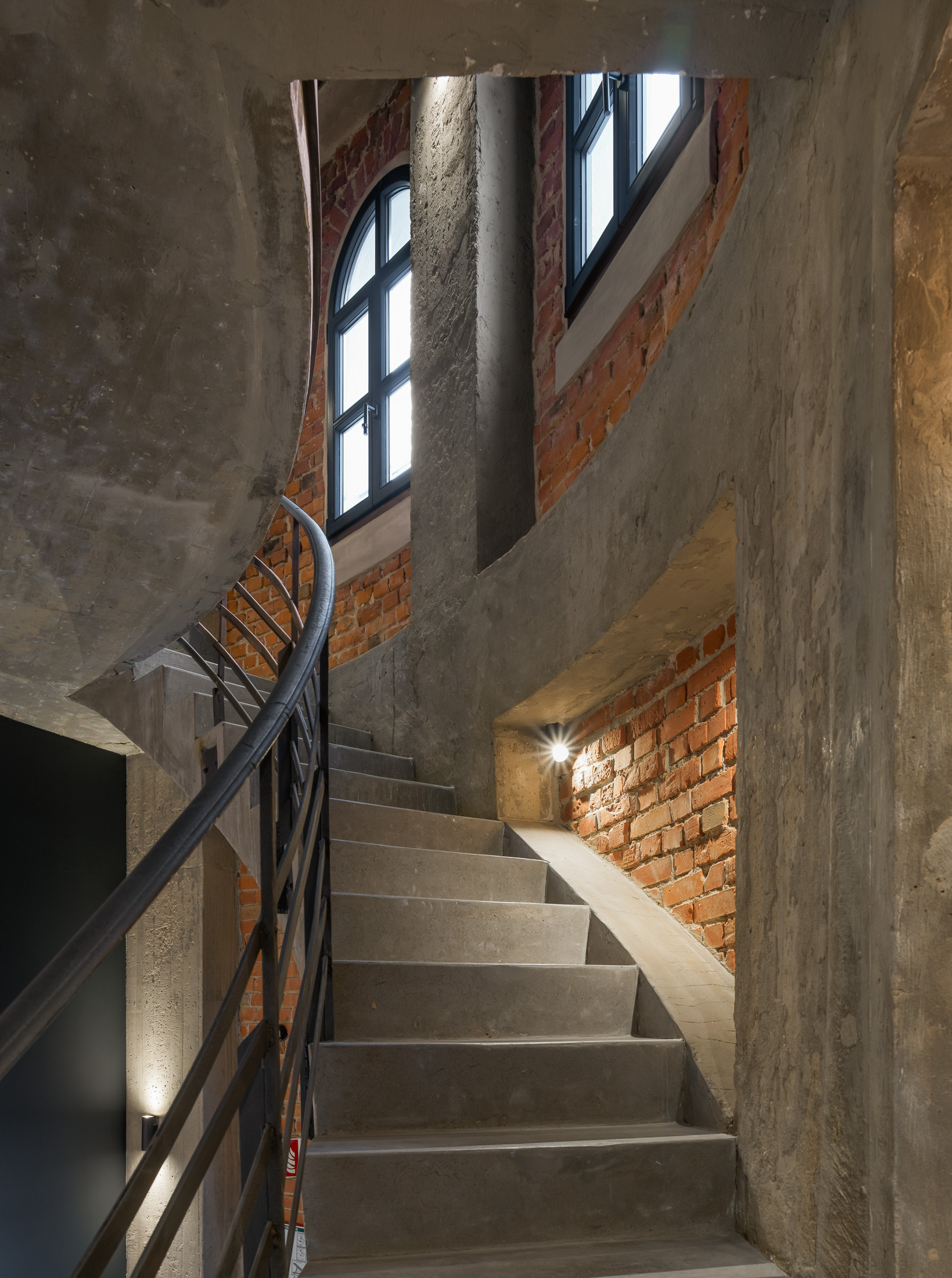
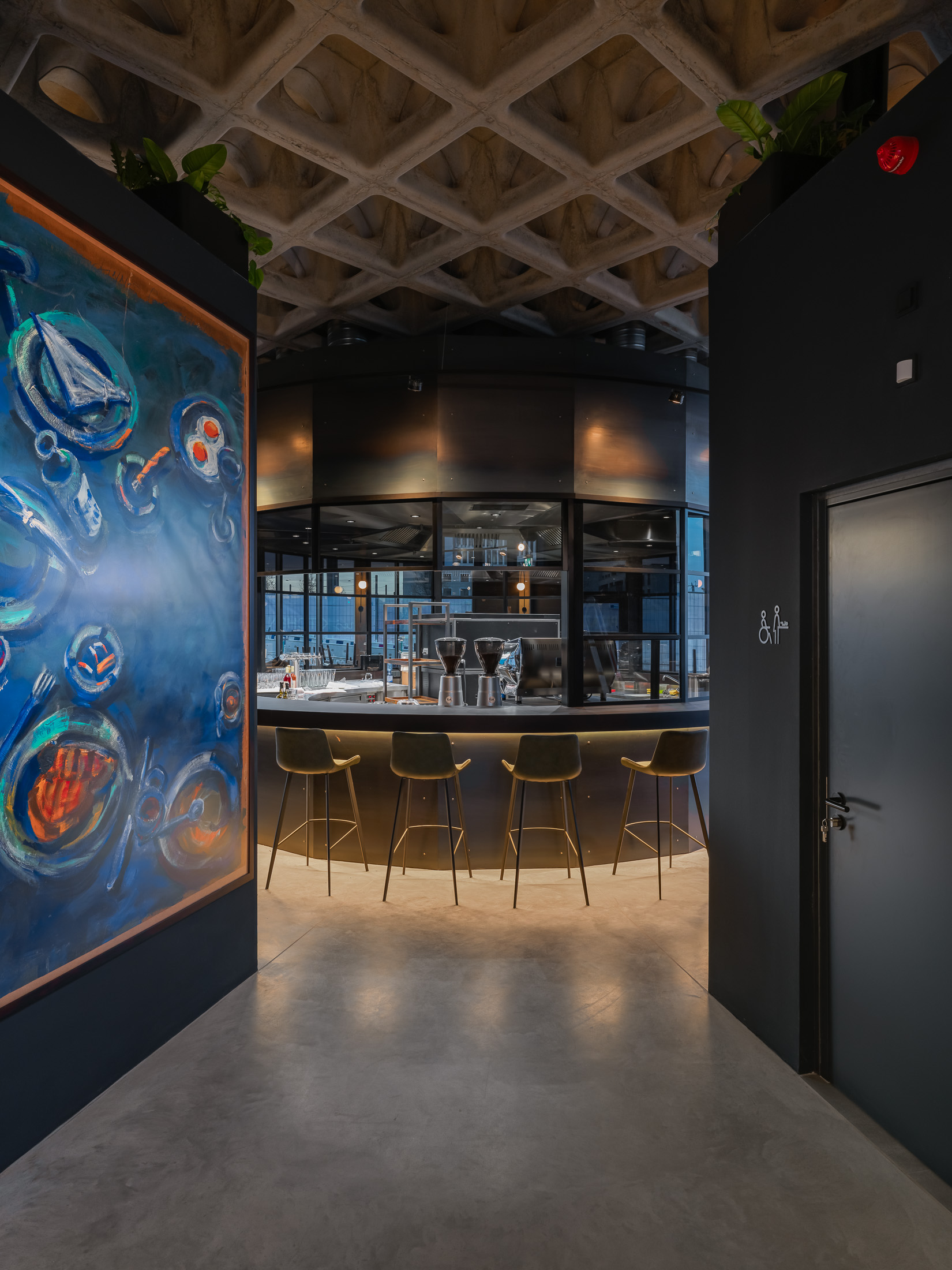


The waffle slab ceiling contributes both acoustically and aesthetically, reinforcing the project's brutalist character. The pavilion accommodates the primary dining area and an open show kitchen, where Mediterranean cuisine is prepared in full view of guests.
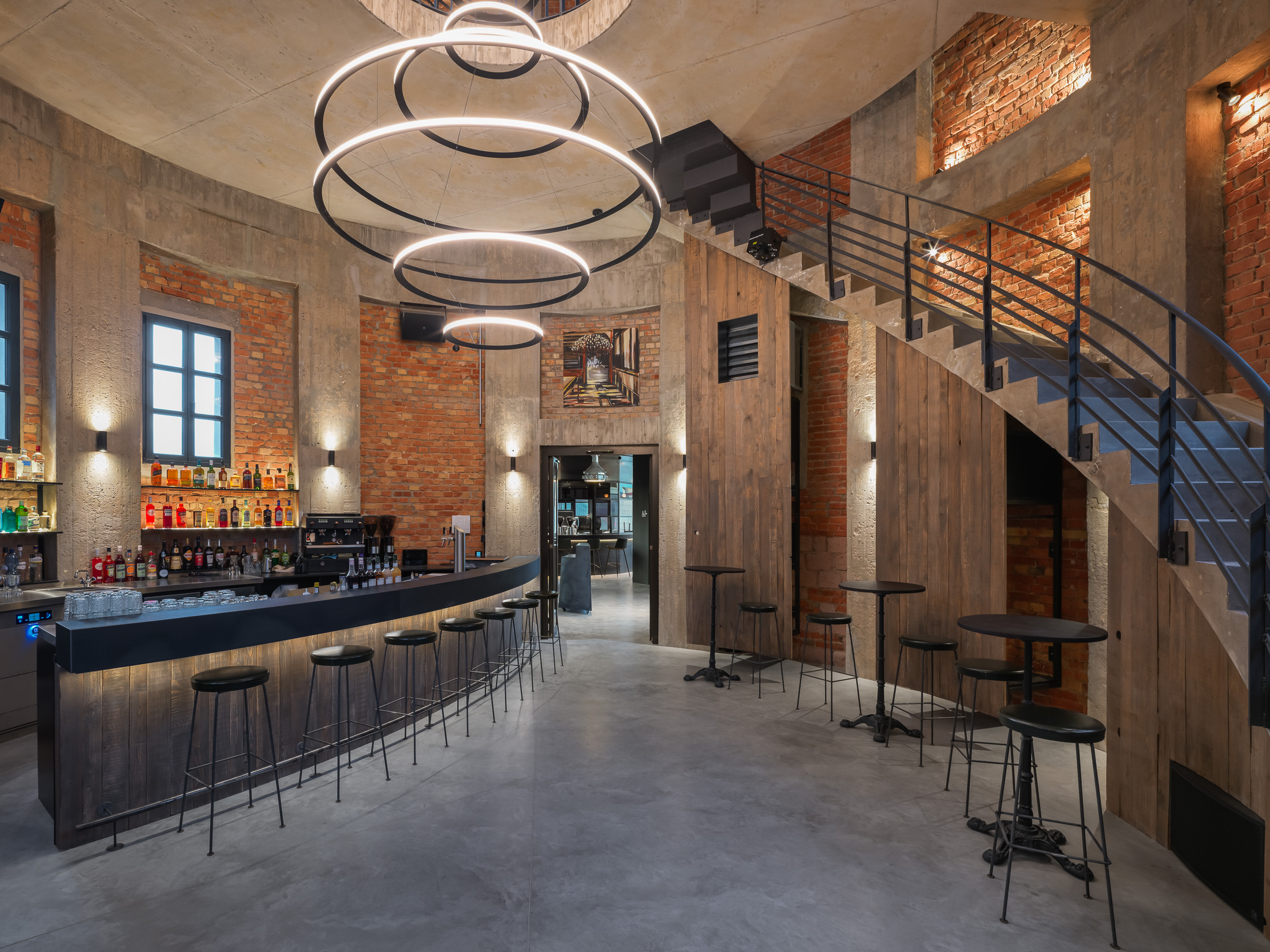
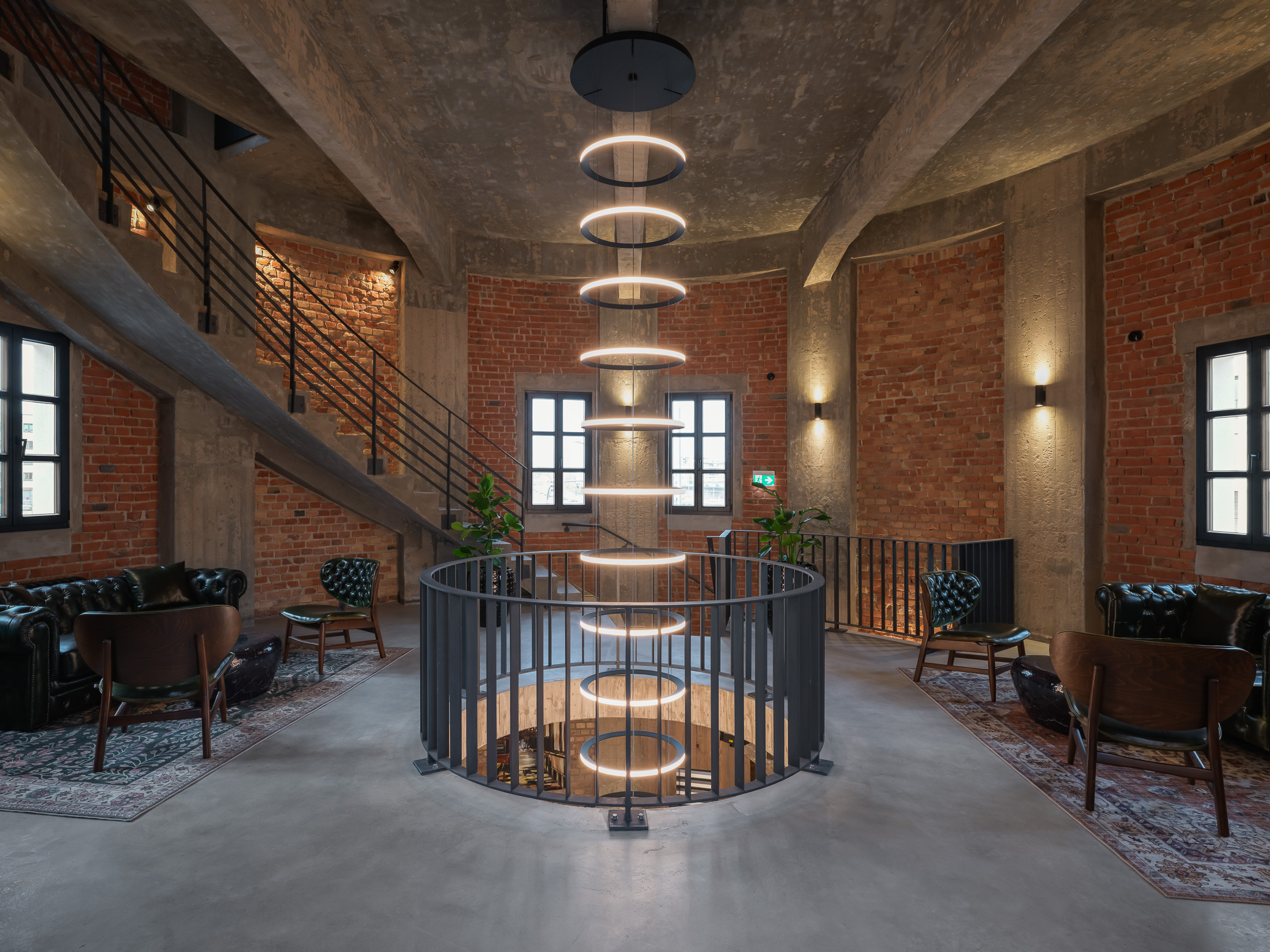
The cocktail bar is housed within the tower itself, crowned by a suspended light installation in the form of an oversized water drop, functioning as both an atmospheric lighting element and a visual focal point. The existing spiral staircase was retained in its original configuration and provides access to the upper floors, which contain additional seating areas and an exclusive lounge for events and private functions.
All service spaces—including storage and cooling rooms, preparation kitchen, staff facilities, plant rooms, and restrooms—are located on the lower ground floor.
The surrounding site was integrated into the innovative Bahnstadt district through a landscape design responding to the volumetry of both the tower and its extension. Red sandstone retaining walls were employed in reference to the materiality of the monument’s base. A comprehensive lighting strategy accentuates the water tower from both interior and exterior perspectives, activating the newly formed square and enhancing its presence after dark.
After nearly four years of planning, followed by two years of construction, the historic state monument has been reimagined as a lively destination for food and drink.